
Abstract
A detailed investigation of the electrochemical reduction of 2-nitroimidazole (2-NIm) in a mixed aqueous medium was carried out by means of cyclic voltammetry (CV) at a mercury electrode. The voltammetric behavior of 2-NIm in 60% dimethylformamide (DMF) ( tetrabutyl ammonium perchlorate, TBAP)/40% aqueous buffer
 is pH-dependent, changing from one irreversible reduction peak at acid pHs to two reduction peaks at alkaline pHs. At pH 2.5 it is possible to obtain a voltammetric pK which is due to the protonation-deprotonation equilibrium produced by the hydroxylamine derivative formed from the reduction of 2-NIm. This indicates that 2-NIm is reduced to the unprotonated hydroxylamine derivative above pH 2.5 and to its protonated form below it. At
 it is possible to observe a cyclic voltammetric couple due to the one-electron reduction of 2-NIm to produce the corresponding nitro radical anion. Furthermore, the nitro radical anion disproportionates with a rate constant,
 , of
 and a half-life,
 , of
 for the first half-life. The voltammetric behavior of 2-NIm in aqueous mixed medium is substantially different from that described in nonaqueous medium; in fact, only in the aqueous medium is it possible to study in isolation the nitro radical anion.
It is possible to distinguish 2-, 4-, and 5-nitroimidazole derivatives (Fig. 1) according to the position of the nitro substituent in the imidazole ring. From the point of view of biological activity, 2-nitroimidazolic derivatives are used preferably as radiosensitizers and as cytotoxins in hypoxic cells, whereas 5-nitroimidazole derivatives are mainly used for their toxicity towards microorganisms and 4-nitroimidazole derivatives are relatively more inert biologically.1 The 2-nitroimidazoles have been used clinically to radiosensitize resistant hypoxic cells. Their use as radiosensitizers takes advantage of their cytotoxicity in hypoxic mammalian cells that allows the sensitivity to the radiation of cancerigenic tumors to be increased.2–4 The mechanism of action usually involves the reduction of the nitro group via single or multiple reduction steps with one, two, four, or six electrons.5 The nitro group is “electron-attractive” and thus may interact with damages on DNA induced by radiation in a manner analogous to oxygen; hence, they are called oxygen mimetic radiosensitizers or classic radiosensitizers.6 Electron transfer from a damaged DNA site to the  group prevents charge recombination and produces the radical anion
 . As a consequence, the subsequent irreversible reactions may lead to a DNA strand breakage and cause the fixation of the damages.7 The selective toxicity of nitroaromatics toward hypoxic cells is due to the production of reactive intermediates, such as nitroso and hydroxylamine derivatives. Their reactivities, and thus cytotoxicities, are modulated by aromatic ring substituents as well as by the pH of the medium.8
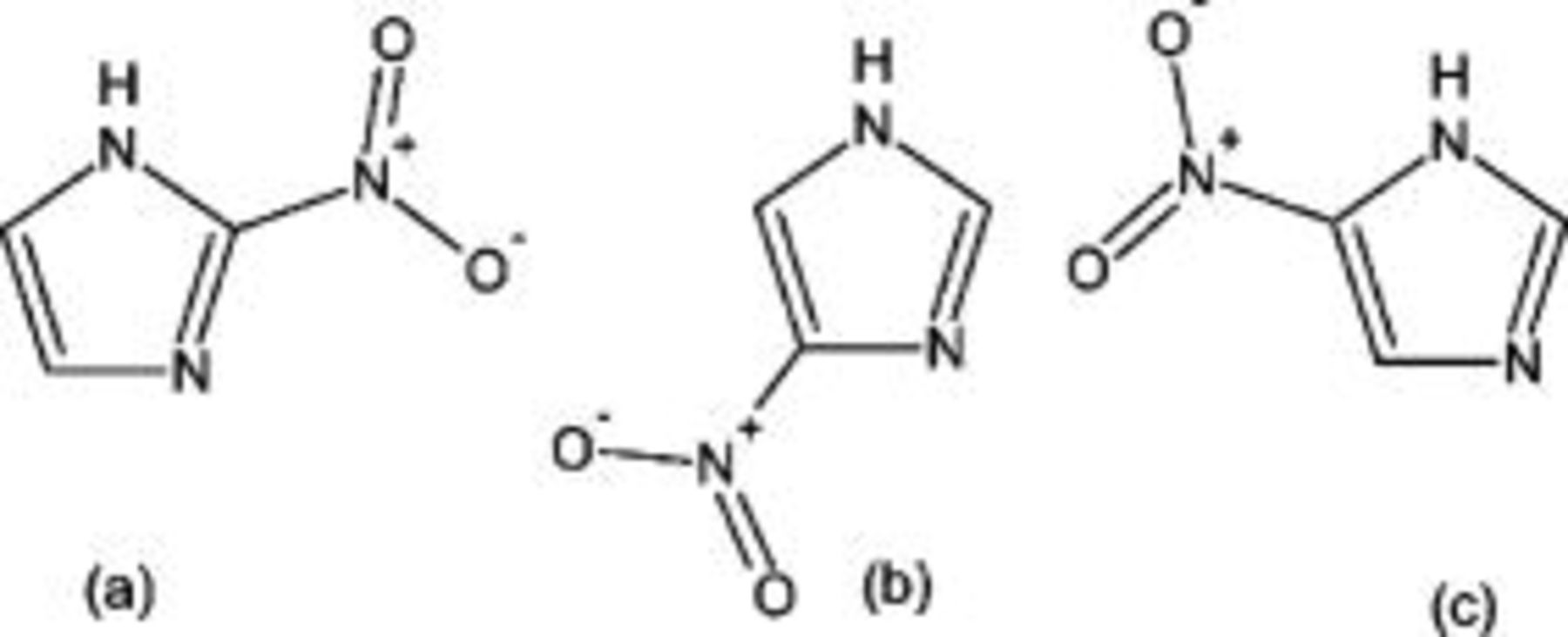
Figure 1. Molecular structures of (a) 2-NIm, (b) 4-NIm, and (c) 5-NIm.
Although nitro reduction and redox behavior are crucial for all biological activity, there are still no conclusive studies about the electrochemistry of 2-nitroimidazole. In fact, electrochemical studies about 2-nitroimidazole derivatives are restricted almost exclusively to work where electrocatalytic reduction on gold and modified gold electrodes is described.9 The mechanism described in that work involved two different routes in an acid medium, one of an electrocatalytic type and the other of an electronic interchange. No reference in that work refers to the formation of radical intermediates. Moreover, no previous studies devoted to elucidating the reduction mechanism of 2-nitroimidazole have been published. In a recent paper,10 we have discussed the electrochemical reduction of 2-nitroimidazole in a nonaqueous medium. In an aprotic medium the voltammogram of 2-nitroimidazole is strongly influenced by the existence of a dissociation equilibrium between the neutral species  and the corresponding conjugate base
 . Consequently, the voltammograms of 2-nitroimidazole produce two well-defined reduction peaks. The first is caused by the reduction of the neutral species according to the following overall mechanism

The second peak is caused by the reduction of the conjugate base to form the corresponding dianion radical according to the following equation

Curiously, in the nonaqueous medium, it was not possible to isolate and characterize the nitro radical anion intermediate of the monoelectronic reduction process.
According to the above results we hypothesize that the behavior in the aqueous medium will vary because the mentioned equilibrium in nonaqueous medium will not exist. Consequently, our current interest is to elucidate the voltammetric behavior in an aqueous mixed medium and to investigate the possible stabilization of the nitro radical anion derivative in this medium.
Experimental
Reagents and solutions
2-nitroimidazole (2-NIm) and 4- nitroimidazole (4-NIm) (Fig. 1a), 97% pure, were obtained from Aldrich Chemical Co. and were used without prior purification. All other reagents employed were of analytical grade. Nitrogen gas was obtained from Alphagaz-Air Liquide with maximum impurities of  ,
 , and
 .
All voltammetric experiments were conducted after bubbling with  for
 in the cell before each run. Temperature was kept constant at
 in all experiments.
Solutions for cyclic voltammetry (CV) were prepared starting from a  stock solution of the nitroimidazole derivative in di methylformamide (DMF) prepared daily. Final solutions in the voltammetric cell were prepared by diluting an appropriate quantity of the stock solution to obtain a final concentration of
 .
Experiments for the pH study were made in a buffer containing 0.05 M boric acid + 0.015 M citric acid (anhydrous) + 0.3 M KCl//DMF [0.2 M tetrabutyl ammonium perchlorate (TBAP)] (40:60). For comparative studies we also used a different aqueous organic medium containing  (70:30) at pH 8.0. The pH was adjusted by the addition of concentrated solutions of
 or
 , depending on the desired final pH.
All pH measurements were carried out with a Crison model Basic 20 pH meter equipped with a glass electrode Crison 52-01 (resolution 0.01, precision  ). The standard solutions used for calibration were Crison 4.00 and 7.02 and Probus 10.00. Measurements of pH were corrected according to the following equation:11
 , where
 equals
 in the mixed solvent,
 is the pH meter reading, and the term
 is the correction factor for the glass electrode, which was calculated for the different mixtures of DMF or
 and aqueous solvent, according to a procedure previously described.12
Apparatus and methods
Voltammetric curves were recorded on an electrochemical analyzer type BAS 100B/W (Bioanalytical System) attached to a PC computer with appropriate software (BAS 100W 2.3 for Windows) for total control of the experiments, data acquisition, and treatment. A static mercury drop electrode (SMDE) ( EF-1400) with a mercury drop area of
 was used as the working electrode and a platinum wire (
 MW-1032) served as the counter electrode. All potentials were measured against

 (
 MF-2052);
 vs saturated calomel electrode (SCE).
The peak current ratio,  , for the reversible first electron transfer (
 couple) was measured for each cyclic voltammogram, according to the procedure described by Nicholson.13 A reproducibility study involving 10 independent runs at different sweep rates (5 and
 ) produced variation coefficients of 0.5 and 1.1% for peak potential and current-ratio measurements, respectively.
Using the theoretical approach of Olmstead and Nicholson,14 the  values experimentally measured at each scan rate were inserted into a working curve to determine the parameter ω, which incorporates the effects of the rate constant, 2-NIm concentration, and scan rate. A plot of ω vs τ resulted in a linear relationship described by the equation
 , where
 is the second-order rate constant for the decomposition of
 , C° is the 2-NIm concentration, and
 . Consequently, we can obtain the second-order rate constant for the decomposition of the nitro radical anion from the slope of the ω vs τ straight line.
Spectrophotometric measurements were recorded in the  range, using an ATI Unicam model UV-2 spectrophotometer in a
 quartz cell and equipped with Vision 2.1 acquisition and treatment software.
Temperature was controlled with a Thermostat/cryostat Selecta Frigiterm-10 with a precision of 0.1°C.
Results and Discussion
2-NIm was electrochemically reduced in a mixed medium containing an aqueous buffer of boric acid 0.05 M + anhydrous citric acid 0.015 M + 0.3 M KCl//DMF (0.2 M TBAP 40:60 by means of CV with a Hg electrode. The voltammetric behavior was found to be pH-dependent, changing from one irreversible reduction peak at acid pH to two peaks at alkaline pH. Figure 2a shows the voltammetric reduction peak in acidic medium. At pH between 2–3 (approx. 2.5) it is possible to observe a splitting of the peak, which is also observed in the  vs pH plot in Fig. 3. The change of the slope in the
 vs pH plot means a change in the overall reaction, probably provoked by the existence of a voltammetric pKa at approximately 2.5 in 2-NIm compound. No change was observed in the UV spectra of 2-NIm in the same pH range (Fig. 2b).
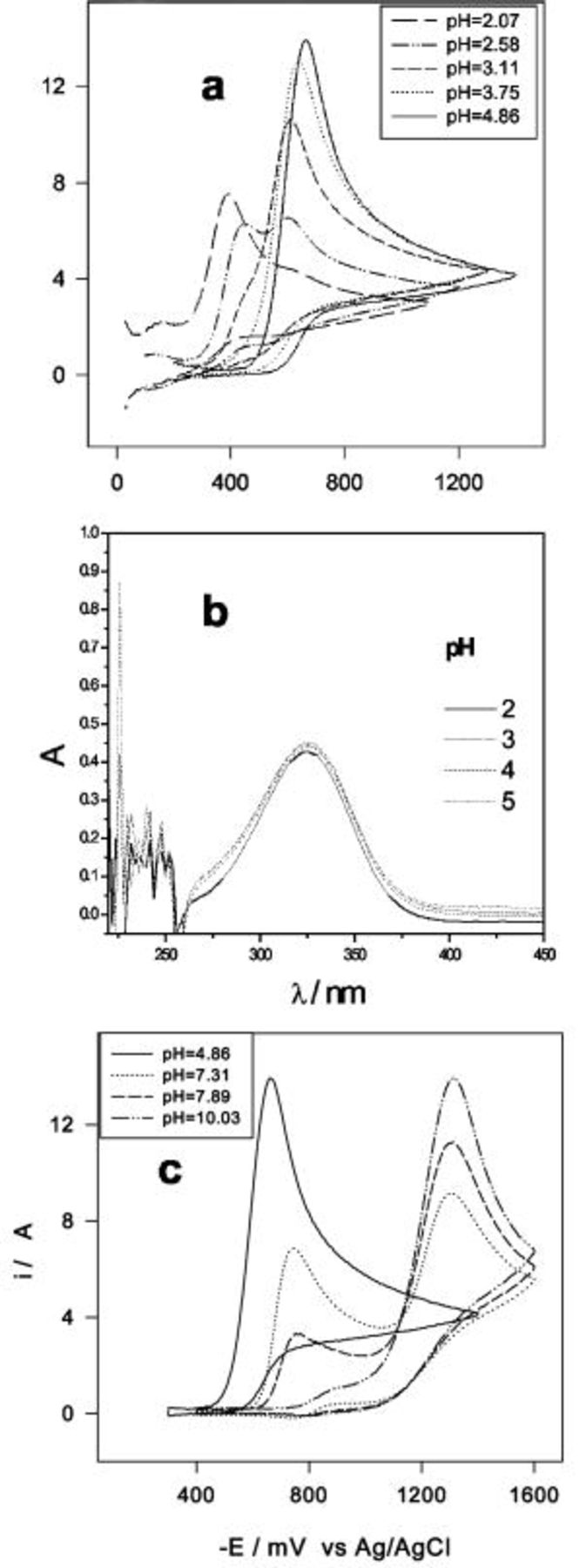
Figure 2. CVs of  2-NIm in 60% DMF (
 TBAP)/40%

 at pH (a) 2–5 and (c) 5–10
 . (b) UV spectra of
 2-NIm in the same pH conditions of a.
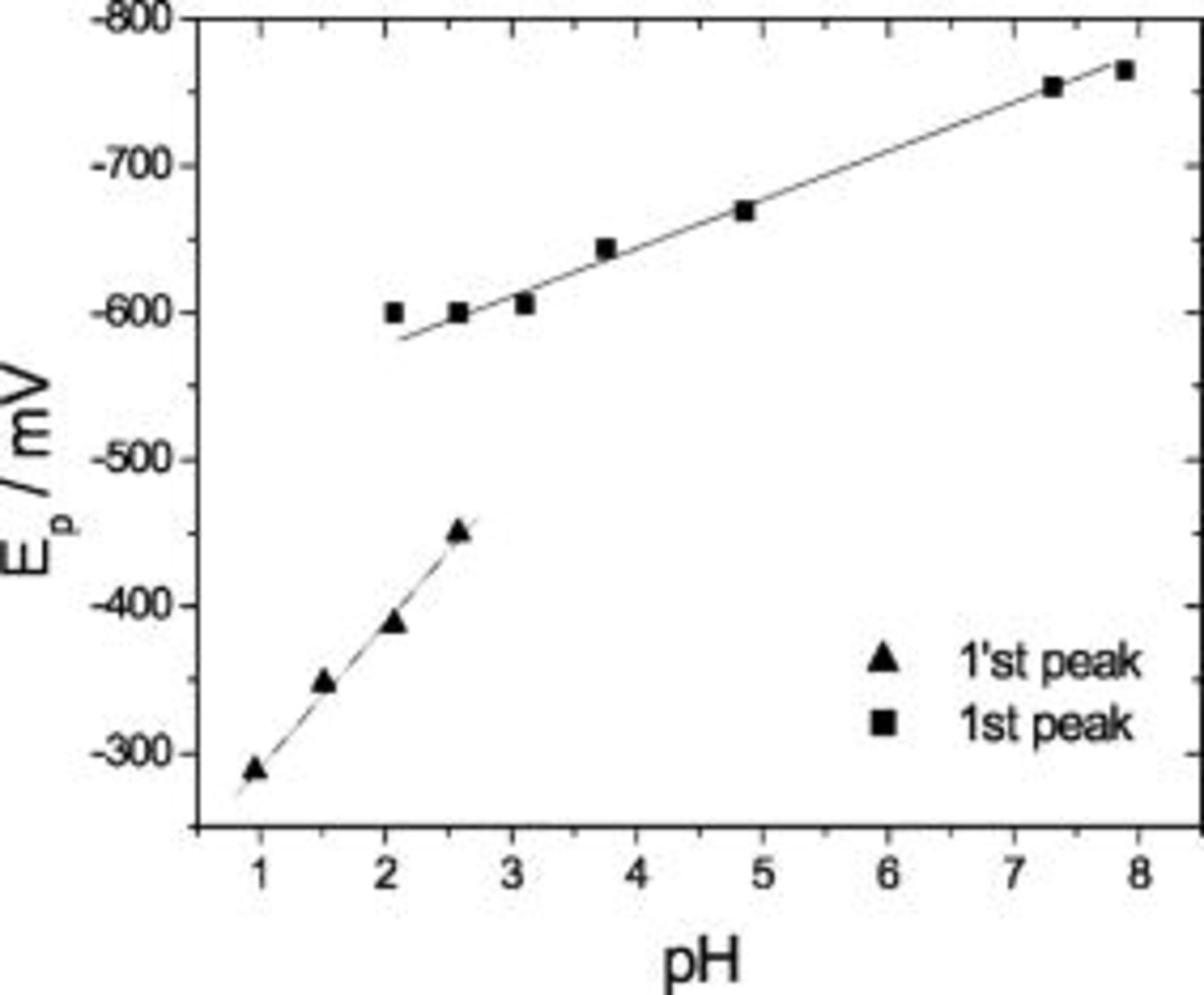
Figure 3. Peak–potential dependence on pH of both peaks for the reduction of 2-NIm in 60% DMF (0.1 M TBAP)/40%  (0.3 M KCl + 0.015 M citric acid + 0.03 M boric acid) in acidic and neutral medium.
Our first hypothesis for explaining the voltammetric pK implied the existence of a protonation–deprotonation equilibrium on the acidic N of the imidazole moiety. However, this hypothesis was discarded because the pKa value of  described for 2-NIm15 is very different. Furthermore, in the same previous paper, UV-absorption bands with
 at 298, 325, and
 for conjugate base, neutral molecule, and conjugate acid, respectively, were described. In our case the UV spectra with an absorption band at 325 nm at pHs between 1 and 5 (Fig. 2b) proved that the only species is the neutral molecule of 2-NIm. A second hypothesis was the possible protonation of the nitro group, but this protonation is very difficult according to the described values of
 for the case of nitrobenzene.16 A third hypothesis assumed that the change in the mechanism is due to the pKa of the product of the electrode reaction, i.e., the hydroxylamine derivative. This hypothesis was supported by a previous work of Laviron et al.17 In that paper, a pKa of 2.5 for the equilibrium between protonated and deprotonated hydroxylamine derivatives from nitrosobenzene was reported. In our case the pKa of 2.5 corresponds to the protonation–deprotonation equilibrium of the hydroxylamine derivative from 2-NIm. This indicates that 2-NIm is reduced to the unprotonated hydroxylamine derivative above pH 2.5 and to its protonated form below it. Consequently, the reduction peaks in acidic medium are due to the well-known18 four-electron reduction of the nitro group to produce the hydroxylamine derivative according to


At  the voltammetric behavior changes, revealing two other cathodic peaks as shown in Fig. 2c. The single peak observed in acidic medium splits into two new peaks as the pH increases. This behavior follows the well-known general pattern, previously described19 for nitro compounds in an aprotic medium or in the presence of inhibitors. Consequently, at
 , the equations describing the two new cathodic peaks correspond to


In Fig. 4 we have summarized the pH effect on cathodic peak current. As can be seen, the peak current is strongly pH dependent, showing the decrease in peak current at acidic pH due to the protonation of the hydroxylamine derivative. Furthermore, at pH near 7 the presence of a new peak and the diminution of the first peak show the change of the mechanism passing from an overall reaction according to Eq. 2 to a new one according to Eq. 3, 4.
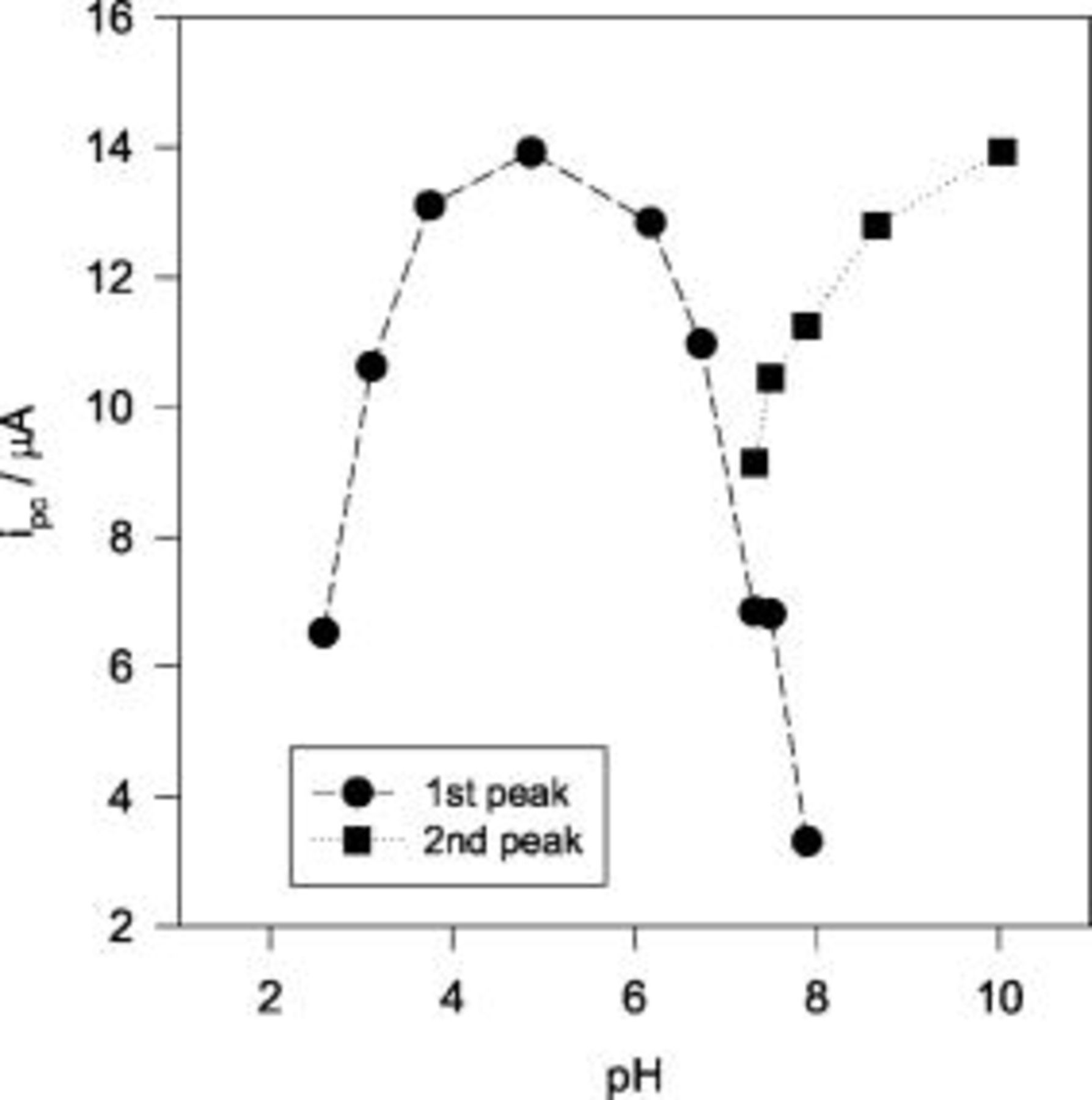
Figure 4. Peak–current dependence on pH of the (circles) first and (squares) second peaks for the reduction of 2-NIm in 60% DMF ( TBAP)/40%

 in acidic and alkaline medium
 .
In the voltammograms at  it is possible to observe an anodic peak associated with the first cathodic peak. However, the current of this anodic peak is considerably enhanced when the sweep range is narrowed. In fact, if the width of the sweep is restricted to involve only the first peak, it is possible to observe a very-well-defined couple, as seen in Fig. 5. From this couple we have measured a
 value of approximately
 , confirming the one-electron character of the couple. Consequently, the observed couple is the one-electron reduction of 2-NIm to form the corresponding nitro radical anion, according to Eq. 3. From the CVs it is possible to calculate the current ratio,
 , and the variation of the current ratio with the sweep rate as shown in Fig. 6a. From this figure we observe an increase of the current ratio with an increase of the sweep rate, reaching a value of 1 at sufficiently high rates. These results imply that the monoelectronic reduction does not correspond to a simple reversible process (i.e.,
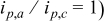 ; on the contrary, the above results are indicative of a coupled chemical reaction. In fact, the results indicate that the nitro radical anion generated in the cathodic sweep is not totally oxidized in the back anodic sweep, producing a current ratio lower than 1. This means that part of the nitro radical anion is consumed by the coupled chemical reaction. In the case of nitro radical anions in mixed medium, the coupled chemical reaction probably is a disproportionation reaction.20 Consequently, the process that better defines the monoelectronic couple should be represented by the following reactions


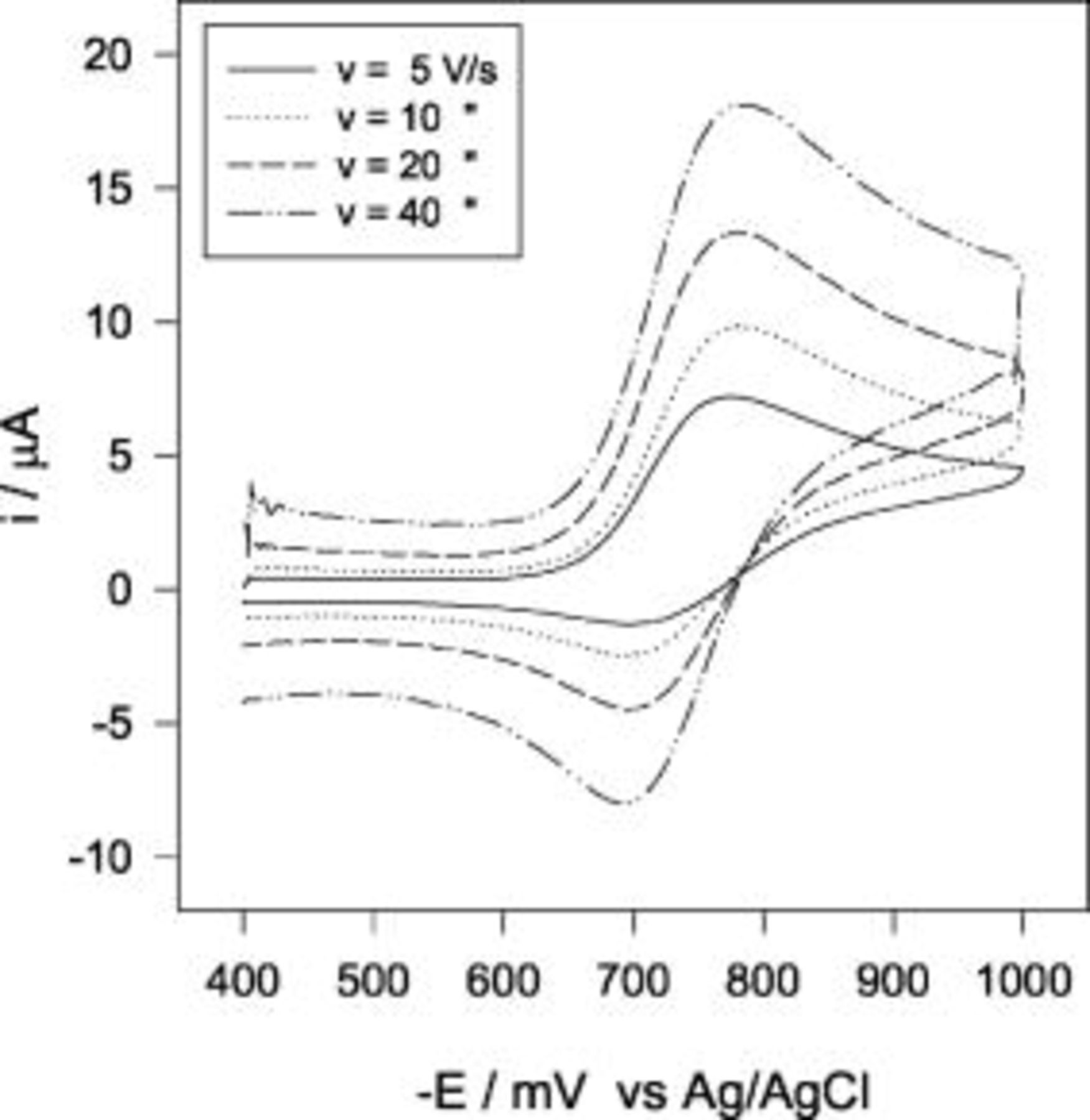
Figure 5. CVs showing the  couple from 1 mM 2-NIm in 60% DMF (0.1 M TBAP)/40%
 (0.3 M KCl + 0.015 M citric acid + 0.03 M boric acid) at different sweep rates (pH 8).
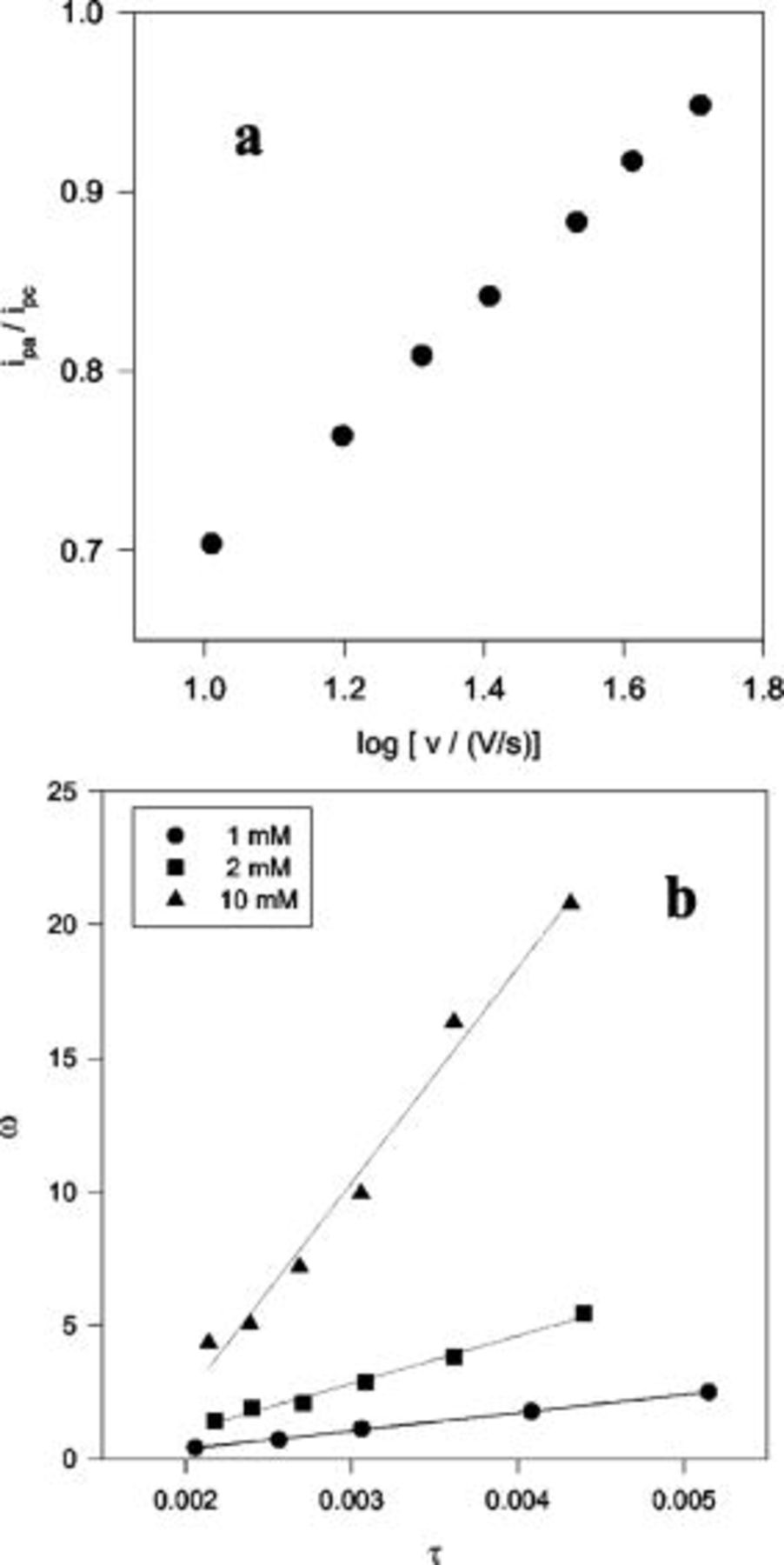
Figure 6. (a) Current-ratio dependence on sweep rates of the  couple from CVs of
 2-NIm in 60% DMF (
 TBAP)/40%

 at different sweep rates at pH 8 and (b) plot of the kinetic parameter, ω, with the time constant, τ, for 1, 2, and
 2-NIm in 60% DMF (
 TBAP)/40%

 at pH 8.
In order to confirm the proposed mechanism, we applied the CV theory for the disproportionation reaction described by Olmstead and Nicholson.14 By applying this theory we obtained straight lines for plots of the kinetic parameter ω vs τ at different concentrations of 2-NIm, in perfect accordance with that anticipated by the theory (Fig. 6b). Furthermore, according to the theory, for  , it should be noted that
 ; consequently, we can obtain the disproportionation rate constant
 from the slope of the straight lines between ω and τ. We have calculated the
 values and the corresponding half-lives
 for the nitro radical anion of 2-NIm. For comparative purposes we have also calculated the
 and
 values for two different aqueous media at the same pH. These results and a comparison with analogous parameters obtained for the 4-NIm isomer21 are shown in Table I. From these results is clear that 2-NIm is more easily reducible than 4-Nim. This difference is explained because the nitro group in the 2-position possesses two adjacent electronegative N atoms, thus diminishing the electron density on the nitro group. Exactly the same effect was found in an aprotic medium.10 From the results in Table I it is possible to deduce that the
 and
 values for the nitro radical anion from 2-NIm are very similar in both mixed aqueous organic mediums. However, the cathodic-peak potential is strongly affected by the nature of the medium. According to these results, the stability of the nitro radical anion appears to be independent of the nature of the aqueous-organic medium, but the ease of formation of the nitro radical anion, expressed in the
 values, is strongly dependent on the medium. When a more aqueous medium is used, but at the same pH, the reduction of 2-NIm is easier by
 .
Table I. Disproportionation rate constants: half-lives (first half-live) for the nitro radical anion and cathodic peak potentials for the  couple for 2- and 4-NIm derivatives in mixed aquo-organic media at pH 8.
| Compound |
 
|
 (ms) |
 (V) |
|---|---|---|---|
| 2-NIm | 678 | 1.5 | 780 |
| 2-NIm | 610 | 1.6 | 660 |
| 4-NIm | 145 | 6.8 | 830 |
aValues obtained in 0.05 M boric acid + 0.015 M citric acid (anhydrous) + 0.3 M KCl//DMF (0.2 M TBAP) (40:60) at pH 8. bValues obtained in 0.1 M Britton–Robinson buffer + 0.3 M KCl//EtOH (70:30) at pH 8.0. cValues obtained from Ref. 21.
Furthermore, in Table I, we see that the disproportionation rate constant,  , is almost five times larger for the 2-NIm derivative than for the 4-NIm derivative. This result is in accord with the fact that 2-NIm derivatives are used as radiosensitizers and as cytotoxins in hypoxic cells. The highest values of
 imply more production of the nitroso intermediate and consequently improved conditions for acting as a cytotoxic agent against hypoxic mammalian cells. Thus, the
 parameter can be considered as an index to account for production of the nitroso derivative.
Conclusions
Although 2-NIm is a relatively simple heterocyclic molecule, its complex behavior is strongly determined by the existence of two N atoms with different characteristics in the molecule. One of them (N1) is linked to an H atom, which can act as an ionizable proton; the other N (N3) can act as a proton acceptor. Consequently, the molecule is very sensitive to the nature of the media. In the previous study in a nonaqueous medium,10 we reported the existence of an equilibrium between the neutral species  and the corresponding conjugate base
 arising from loss of a proton from the imino nitrogen (N1). In the present study in aqueous mixed medium, we have detected that the only present species was the neutral molecule. However, the overall electrodic reaction was influenced with the protonation of the hydroxylamine derivative generated in the reduction of 2-NIm.
According to the above results the voltammetric reduction of 2-NIm in a mixed aqueous medium is substantially different from that seen previously in totally nonaqueous medium.10 The most important difference is related to the formation and stability of the nitro radical anion. In spite of what seems to be a contradiction, the nitro radical anion is stabilized only in the mixed aqueous medium. This result is rather paradoxical considering that free radicals are normally better stabilized in nonaqueous media. In this paper we have studied the couple in isolation, showing the formation of the nitro radical anion. According to this study we have postulated that a coupled disproportionation reaction follows the one-electron transfer and we have calculated the rate constant,  , for this disproportionation reaction. Considering that the disproportionation reaction produces the toxic nitroso species, which is responsible for the selective toxicity of 2-NIm derivatives toward hypoxic cells, we propose the
 parameter as an index to account for production of the nitroso derivative.
Acknowledgments
The authors are grateful to FONDECYT (project no. 1050767) for support of this work.
University of Chile assisted in meeting the publication costs of this article.
