
Abstract
In this study, the effect of cross-linker content on the chemical stability of poly(ethylene-alt-tetrafluoroethylene) (ETFE)-based radiation-grafted and sulfonated membranes was investigated. An ex situ degradation test in  solution showed a strong increase in stability of cross-linked membranes compared to uncross-linked ones. Excessive cross-linking, however, is detrimental to the chemical and mechanical properties. Furthermore, the stability of grafted membranes based on ETFE was superior to those based on poly(tetrafluoroethylene-co-hexafluoropropylene) (FEP). An in situ long-term test in a
 single cell over
 , using an ETFE-based grafted membrane optimized with respect to cross-linker content, with a graft level of 25% was carried out. The performance of the membrane electrode assembly exhibited a voltage decay rate of
 over the testing time at a current density of
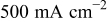 and a cell temperature of
 , while the hydrogen permeation showed a steady increase over time. This indicates that, to some extent, changes in the membrane morphology occur over the operating period. Local postmortem analysis of the tested membrane reveals that high degradation was observed in areas adjacent to the
 inlet and in other areas nearby.
Access this article
The computer you are using is not registered by an institution with a subscription to this article. Please choose one of the options below.
Purchase from
Purchase this article from our trusted document delivery partners.

Make a recommendation
To gain access to this content, please complete the Recommendation Form and we will follow up with your librarian or Institution on your behalf.
For corporate researchers we can also follow up directly with your R&D manager, or the information management contact at your company. Institutional subscribers have access to the current volume, plus a 10-year back file (where available).
