
Abstract
We have investigated how secondary phases appear and disappear upon increasing europium concentration from 1.5 to 16.2 atom % in standard strontium borophosphate phosphate phosphor,  , using X-ray diffraction and photoluminescence and photoluminescence excitation measurements both at room temperature and at 80 K. In standard phosphor, a minor phase of strontium phosphate,
 , was detected besides the main component
 . With increasing Eu concentration, the phase
 disappears and new phases of
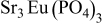 ,
 , and
 are formed.
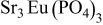 is observed to be the major phase in 16.2 atom % samples. It contains only trivalent europium. An attempt has also been made to understand the origin of these secondary phases and their significance for the performance of this luminescent material. This study shows how X-ray diffraction technique and photoluminescence spectroscopy can be used in a complementary manner to explore the phase composition of the materials.
Access this article
The computer you are using is not registered by an institution with a subscription to this article. Please choose one of the options below.
Purchase from
Purchase this article from our trusted document delivery partners.

Make a recommendation
To gain access to this content, please complete the Recommendation Form and we will follow up with your librarian or Institution on your behalf.
For corporate researchers we can also follow up directly with your R&D manager, or the information management contact at your company. Institutional subscribers have access to the current volume, plus a 10-year back file (where available).
