
Abstract
The formation and reduction of anodic oxide on 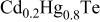 (CMT) are studied by electrochemical methods and x‐ray photoelectron spectroscopy (XPS). The anodic oxide is formed at
 for pH 4.9 and
 for pH 13 (SHE). The
 and
 contents relative to
 increase within the oxide with the pH value. In a small potential range,
 , pH 4.9, and
 , pH 13,
 is oxidized separately. This behavior leads to a
 oxide surface layer in alkaline solutions whereas in acidic solutions the
 oxidation products are dissolved completely and the oxide is stabilized only by an
 content for
 . In alkaline solutions, CMT shows a small Cd deficiency at the semiconductor‐oxide interface according to an increased Cd content for the oxide. Ethylene glycol is a necessary additive to
 to form a well‐passivating film presumably by the reduction of the solubility of the oxide. The presence of Cd and Hg in the bulk and
 and
 within the oxide is a necessary condition from the side of the solid phase. The formation of tellurites and ditellurites seems reasonable to explain the stability of the passivating oxide layer.
Access this article
The computer you are using is not registered by an institution with a subscription to this article. Please choose one of the options below.
Purchase from
Purchase this article from our trusted document delivery partners.

Make a recommendation
To gain access to this content, please complete the Recommendation Form and we will follow up with your librarian or Institution on your behalf.
For corporate researchers we can also follow up directly with your R&D manager, or the information management contact at your company. Institutional subscribers have access to the current volume, plus a 10-year back file (where available).
