
Abstract
Charge‐discharge characteristics of Li negative and  positive electrodes have been studied in
 solutions of tetrahydrofuran (THF), 1,3‐dioxolane (DOL), and their mixture. Solvent mixing effects on the charge‐discharge characteristics were investigated. Charge‐discharge potentials at the Li electrode in
 were more stable than those in
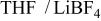 and
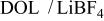 , and they showed the least variation with the cycles. Ionic behavior in the solutions is discussed through the data of current‐potential curves of the electrodes and electrolytic conductivity of the solutions. With respect to the
 electrode, charging efficiency in THF was seemingly the best, but the efficiency variation with the cycle in DOL‐THF was very small. It was concluded that advantages of solvent mixing should be evaluated totally in
 cells.
Access this article
The computer you are using is not registered by an institution with a subscription to this article. Please choose one of the options below.
Purchase from
Purchase this article from our trusted document delivery partners.

Make a recommendation
To gain access to this content, please complete the Recommendation Form and we will follow up with your librarian or Institution on your behalf.
For corporate researchers we can also follow up directly with your R&D manager, or the information management contact at your company. Institutional subscribers have access to the current volume, plus a 10-year back file (where available).
