
Abstract
The empirical rate law for the electrocatalyzed oxidation of As(III) at a Pt RDE in acidic media was determined from potentiostatic measurements to be

where  and
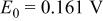 vs. SCE. For an electrode surface covered with less than the equivalent of a monolayer of
 (i.e.,
 ),
 , whereas for an extended oxide coverage (i.e.,
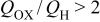 ),
 . The coefficient
 is independent of time
 and electrode potential
 , but decreases as a function of the log of As(III) flux, i.e.,
 . It is
 and not
 that is the active agent for oxygen‐atom transfer in the electrocatalytic mechanism. The finite rate of oxidation of As(III) observed for
 is concluded to result from ·OH generated as the first step in the mechanism for continued oxide growth. It is concluded also that the generation of ·OH at a highly oxidized Pt surface occurs at a rate independent of applied potential.
Access this article
The computer you are using is not registered by an institution with a subscription to this article. Please choose one of the options below.
Purchase from
Purchase this article from our trusted document delivery partners.

Make a recommendation
To gain access to this content, please complete the Recommendation Form and we will follow up with your librarian or Institution on your behalf.
For corporate researchers we can also follow up directly with your R&D manager, or the information management contact at your company. Institutional subscribers have access to the current volume, plus a 10-year back file (where available).
