
Abstract
Amorphous 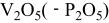 is recognized to be a good cathode active material in lithium secondary cells with nonaqueous liquid electrolyte, because of its long cycling stability (over 3000 cycles) and high specific capacity (150 mAh/g, at 2 to 3.5 V and 0.5 mA/cm2). To study the cathode characteristic of amorphous
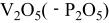 at elevated temperature, secondary solid‐state cells with lithium anodes, a polymer electrolyte
 , and amorphous
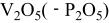 composite cathodes were prepared. The electrochemical behavior of these cells was determined at 100°C. Amorphous
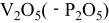 functioned as the cathode active material at 100°C. The Li/polymer electrolyte/amorphous
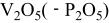 cell exhibited a high specific capacity for the cathode (over 200 mAh/g) to over 80 cycles at 100°C, under the best condition of a voltage range of 3.5 to 1.8 V, a discharge current of 100 μA/cm2, and a charge current of 50 μA/cm2. These results indicate that amorphous
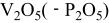 is a good candidate for the cathode in a solid‐state cell at elevated temperature.
Access this article
The computer you are using is not registered by an institution with a subscription to this article. Please choose one of the options below.
Purchase from
Purchase this article from our trusted document delivery partners.

Make a recommendation
To gain access to this content, please complete the Recommendation Form and we will follow up with your librarian or Institution on your behalf.
For corporate researchers we can also follow up directly with your R&D manager, or the information management contact at your company. Institutional subscribers have access to the current volume, plus a 10-year back file (where available).
