
Abstract
Our team investigated the characteristics of inserting an 80 nm amorphous‐like  barrier layer between aluminum film and a shallow diode to retard aluminum and silicon interdiffusion. In one chamber without breaking vacuum, we used a nitrogen plasma treatment to stuff nitrogen atoms into the grain boundaries of amorphous‐like tungsten silicide film. The nitrogen atoms eliminated the fast diffusion paths of film, thus giving the amorphous‐like tungsten silicide film a smaller diffusion coefficient. We then examined the failure of diodes with amorphous‐like
 barriers which were annealed at 575°C for 30 min and which had leakage currents of
 and
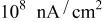 . These diodes failed due to the diffusion of aluminum along the sidewalls of the barriers and the field oxide interface. In the search for a solution to this problem we investigated the use of tetraethylorthosilicate, which is known for its thermal stability as a stress buffer. In this experiment we used tetraethylorthosilicate to form a “contact array structure” which in turn prevented diode failure at 575°C annealing for 30 min, and furthermore, the diodes in the contact array structure only began to show evidence of degradation at 600°C. © 1999 The Electrochemical Society. All rights reserved.
Access this article
The computer you are using is not registered by an institution with a subscription to this article. Please choose one of the options below.
Purchase from
Purchase this article from our trusted document delivery partners.

Make a recommendation
To gain access to this content, please complete the Recommendation Form and we will follow up with your librarian or Institution on your behalf.
For corporate researchers we can also follow up directly with your R&D manager, or the information management contact at your company. Institutional subscribers have access to the current volume, plus a 10-year back file (where available).
