
Abstract
Thin‐film cathodes of lithium manganese oxide, 0.3–3 μm thick, were deposited by rf magnetron sputtering of a  ceramic target onto unheated substrates. The resulting films were dense,
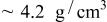 , with a ∼50 Å nanocrystalline spinel structure. The film composition was typically
 and 1.2 <
 < 2.2. When cycled in a thin‐film rechargeable lithium battery, specific cathode capacities of 145 ± 23 and ∼270 mAh/g were realized for discharge from 4.5 V to either 2.5 or 1.5 V, respectively. The discharge and charge current densities were limited by the resistivity of lithium transport into and through the cathode. After thousands of cycles at 25°C, there was a small increase in cell resistance. After several hundred cycles at 100°C, the discharge curves developed a stable knee at ∼4 V characteristic of crystalline
 cathodes. The polarization of the discharge/charge cycles were interpreted in terms of free energy of mixing curves. © 1999 The Electrochemical Society. All rights reserved.
Access this article
The computer you are using is not registered by an institution with a subscription to this article. Please choose one of the options below.
Purchase from
Purchase this article from our trusted document delivery partners.

Make a recommendation
To gain access to this content, please complete the Recommendation Form and we will follow up with your librarian or Institution on your behalf.
For corporate researchers we can also follow up directly with your R&D manager, or the information management contact at your company. Institutional subscribers have access to the current volume, plus a 10-year back file (where available).
