
Abstract
Electrode materials of the formula  were prepared by an ion‐exchange process from
 and were examined by X‐ray diffraction and convergent‐beam electron diffraction to determine crystal structure and phase purity. Electron diffraction data showed that a typical parent
 sample consisted predominantly of layered
 with lithiated‐spinel
 present in minor concentration; orthorhombic
 (Pmmm) was detected in trace quantity. An orientation relationship between the monoclinic layered
 and tetragonal lithiated‐spinel
 was obtained from an analysis of single‐crystal electron diffraction data. Electron diffraction analyses of three electrochemically cycled
 (0 <
 < 1) samples showed that the parent compound was unstable to repeated lithium intercalation/deintercalation and transformed to a spinel‐type structure, consistent with previous reports. These
 electrodes, like those derived from
 , show greater stability compared to standard
 spinel electrodes, when cycled between 4.6 and 2.0 V. The unexpected stability of the
 electrodes (0.5 ≤
 < 1.0) at 3 V is attributed to the presence of
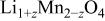 spinel domains (0 <
 < 0.33) in a composite electrode structure. © 1999 The Electrochemical Society. All rights reserved.
Access this article
The computer you are using is not registered by an institution with a subscription to this article. Please choose one of the options below.
Purchase from
Purchase this article from our trusted document delivery partners.

Make a recommendation
To gain access to this content, please complete the Recommendation Form and we will follow up with your librarian or Institution on your behalf.
For corporate researchers we can also follow up directly with your R&D manager, or the information management contact at your company. Institutional subscribers have access to the current volume, plus a 10-year back file (where available).
