
Abstract
This work presents the preparation and characterization of dimensionally stable anodes (DSA) of nominal composition  , modified by electrodeposition of small amounts of Pt or
 . Partial coverage of the anode surface with the modulator metals allowed us to change the coating properties in a significant way. The purpose of this preparation was to modulate the anode characteristics to enhance its electrocatalytic activity and obtain the maximum advantage from the mechanical resistance of DSA-type anodes. This new composite was applied to formaldehyde electro-oxidation. Bulk electrolysis experiments were carried out in acid medium. Electrode efficiency with respect to the formation of the more oxidized compound
 was shown to be related with the amount and distribution of electrodeposited platinum over the DSA surface. The DSA modified with

 was more efficient than bare DSA. However, the amount of
 obtained with the former electrode was still lower than that obtained with the platinum-modified ones. Bulk electrolysis results showed that DSA is not an inert substrate once it is clear that the same amount of electrodeposited catalyst on the
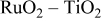 substrate increases
 formation.
Access this article
The computer you are using is not registered by an institution with a subscription to this article. Please choose one of the options below.
Purchase from
Purchase this article from our trusted document delivery partners.

Make a recommendation
To gain access to this content, please complete the Recommendation Form and we will follow up with your librarian or Institution on your behalf.
For corporate researchers we can also follow up directly with your R&D manager, or the information management contact at your company. Institutional subscribers have access to the current volume, plus a 10-year back file (where available).
