
Abstract
A new compound,  , was found and its Eu‐activated fluorescence as well as its crystal symmetry was studied. It is face‐centered cubic, with
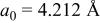 . The emission spectrum shows considerable line broadening and the fluorescence as a function of Eu concentration suggests the presence of two emitting sites, both of which tend to dissociate into nonluminescent defects at high firing temperatures. Replacement of Zn by Mg or of Ta by Nb leads to isomorphic compounds with similar fluorescence; replacement of Zn by Ca produced a multiphase material containing a moderate amount of the same cubic phase.
Access this article
The computer you are using is not registered by an institution with a subscription to this article. Please choose one of the options below.
Purchase from
Purchase this article from our trusted document delivery partners.

Make a recommendation
To gain access to this content, please complete the Recommendation Form and we will follow up with your librarian or Institution on your behalf.
For corporate researchers we can also follow up directly with your R&D manager, or the information management contact at your company. Institutional subscribers have access to the current volume, plus a 10-year back file (where available).
