
Abstract
The mechanism of oxidation of I− in a nonpolar solvent consisting of 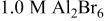 and
 in an aromatic hydrocarbon was studied. A chemical step following charge transfer, in which I− is regenerated, was observed. It was postulated that bromination of the solvent occurred. Oxidation of Br−by
 to
 or
 is possible in this system since the standard potentials for different redox couples are much closer than in aqueous solutions. Qualitative mechanistic information obtained from analysis of cyclic voltammograms was consistent with the mechanism derived on the basis of steady‐state current/potential measurements. It was observed that iodine is reduced rapidly in this system if mesitylene is used as the solvent and much more slowly in benzene. The half‐wave potential for the oxidation of I− is about 1.10V vs.RAlE, compared to about 2.2V in aqueous solutions.
Access this article
The computer you are using is not registered by an institution with a subscription to this article. Please choose one of the options below.
Purchase from
Purchase this article from our trusted document delivery partners.

Make a recommendation
To gain access to this content, please complete the Recommendation Form and we will follow up with your librarian or Institution on your behalf.
For corporate researchers we can also follow up directly with your R&D manager, or the information management contact at your company. Institutional subscribers have access to the current volume, plus a 10-year back file (where available).
