
Abstract
The rotating ring‐disk electrode technique was used to detect the presence of soluble Pb(IV) species generated during the anodic charging of the lead dioxide electrode in  . By potentiostatting a gold ring at 0.2V vs.
 while scanning the lead disk between 0.8 and 1.7V, it was possible to observe a small cathodic ring current corresponding to the anodic current waves on the
 disk, and attributable to the reduction of Pb(IV) to Pb(II). This paper presents evidence for the generation of soluble Pb(IV) as an unstable intermediate during the charging of the
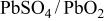 electrode. The effect of addition of small amounts of
 to the
 electrolyte is also illustrated.
Access this article
The computer you are using is not registered by an institution with a subscription to this article. Please choose one of the options below.
Purchase from
Purchase this article from our trusted document delivery partners.

Make a recommendation
To gain access to this content, please complete the Recommendation Form and we will follow up with your librarian or Institution on your behalf.
For corporate researchers we can also follow up directly with your R&D manager, or the information management contact at your company. Institutional subscribers have access to the current volume, plus a 10-year back file (where available).
