
Abstract
New electrolyte salts based on the reaction between  and either
 or
 in
 substantially reduce voltage delay in laboratory half‐cells. The maximum effect was obtained with the
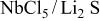 combination. The conductivity of both electrolytes is
 at 26°C. Observations with scanning electron microscopy (SEM) show that the anode film formed in the new electrolyte has a different morphology and appears less dense than the film formed in control
 electrolyte. The anodic rate capability of Li is slightly greater, over a range of over‐potentials, in the
 electrolyte than in
 . Atomic absorption, infrared, and x‐ray photoelectron spectroscopy and electrochemical analysis suggest that the salt formed by reacting
 with
 in
 is either
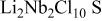 or
 . The mechanism for reducing voltage delay and affecting anode film morphology is thought to be associated with the nature of the salt's anion, or possibly the
 produced when
 is combined with the
 in
 .
Access this article
The computer you are using is not registered by an institution with a subscription to this article. Please choose one of the options below.
Purchase from
Purchase this article from our trusted document delivery partners.

Make a recommendation
To gain access to this content, please complete the Recommendation Form and we will follow up with your librarian or Institution on your behalf.
For corporate researchers we can also follow up directly with your R&D manager, or the information management contact at your company. Institutional subscribers have access to the current volume, plus a 10-year back file (where available).
