
Abstract
Arsenosilicate glass (AsSG) with dopant levels up to 15% was prepared using TEOS and triethoxiarsine (TEOA) or triethylarsenate (TEAs). The optimum deposition parameters and film properties like step coverage, uniformity, and particle densities correspond to the results obtained for undoped 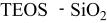 . The different dissociation kinetics influence the way in which the arsenic is incorporated into the glass. Films prepared with TEAs are better diffusion sources because they do not tend to produce arsenic pile‐up at the silicon surface. By heat‐treating AsSG films with 6% As for 30–60 min at 1000°C, surface concentrations of >1019 At cm−3 with junction depths below 200 nm are obtained on planar substrates. Slightly lower As concentrations are measured in trenches, an effect correlating with the different crystal orientations. Gate oxides grown on As diffused or undoped substrates show the same electrical qualities. By incorporating the AsSG trench doping into a complete process sequence, trench cell capacitors were produced and evaluated. The AsSG doping principle was found to be a safe and production‐oriented process.
Access this article
The computer you are using is not registered by an institution with a subscription to this article. Please choose one of the options below.
Purchase from
Purchase this article from our trusted document delivery partners.

Make a recommendation
To gain access to this content, please complete the Recommendation Form and we will follow up with your librarian or Institution on your behalf.
For corporate researchers we can also follow up directly with your R&D manager, or the information management contact at your company. Institutional subscribers have access to the current volume, plus a 10-year back file (where available).
