
Abstract
We fabricated metal oxide semiconductor field effect transistor (MOSFETs) with  -thick Hf-silicate/
 gate dielectrics on SiON base layers of different nitrogen concentration and studied the effects of the nitrogen concentration on their electrical properties. The gate dielectrics were deposited by atomic layer deposition (ALD) technology using
 and
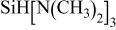 precursors.
 was used as an oxidant. Rapid thermal annealing (RTA) in a NO ambient gave rise to a SiON layer with a nitrogen concentration of about
 . With a
 ambient, the nitrogen concentration increased to 16%. Ultrathin films with equivalent oxide thickness (EOT) of about
 could be fabricated using Hf-silicate/
 gate stacks on base layers of SiON. The leakage current density of devices with SiON base layers was about 1 order of magnitude less than that with a
 base layer, and that increased about 100 times for every
 decrease of EOT. The flatband voltage
 and the threshold
 with SiON base layers were slightly lower than those with a
 base layer, which implies that positive charge is generated due to nitrogen at the interface. The effective mobility for devices with Hf-silicate/
 gate stacks on SiON base layers was less than those with a
 base layer due to the higher interface trap density
 . Moreover, increasing the nitrogen concentration in the base layer led to an increase in the interfacial trap density, thereby decreasing the effective mobility.
Access this article
The computer you are using is not registered by an institution with a subscription to this article. Please choose one of the options below.
Purchase from
Purchase this article from our trusted document delivery partners.

Make a recommendation
To gain access to this content, please complete the Recommendation Form and we will follow up with your librarian or Institution on your behalf.
For corporate researchers we can also follow up directly with your R&D manager, or the information management contact at your company. Institutional subscribers have access to the current volume, plus a 10-year back file (where available).
