
Abstract
A number of 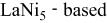 intermetallics with Ce, Sn, and Co substitutions were prepared by the arc‐melting technique and tested as electrodes in
 batteries. Sn and Co substitution expand the unit cell and lower the plateau pressures whereas the introduction of Ce results in the reverse effects. Ce and Co substitutions result in a decrease in the storage capacity of the intermetallics. Most of the Sn substituted compounds exhibit high hydriding capacities, though they widely differ in their electrochemical behavior, viz., cycle life and rate capabilities. Two such intermetallic compounds, with different amounts of substitution, show promise with high capacities (over 300 mAh/g), even at high rates of discharge. Intermetallics with Ce, Sn, and Co retain the high capacity upon long‐term cycling.
Access this article
The computer you are using is not registered by an institution with a subscription to this article. Please choose one of the options below.
Purchase from
Purchase this article from our trusted document delivery partners.

Make a recommendation
To gain access to this content, please complete the Recommendation Form and we will follow up with your librarian or Institution on your behalf.
For corporate researchers we can also follow up directly with your R&D manager, or the information management contact at your company. Institutional subscribers have access to the current volume, plus a 10-year back file (where available).
