
Abstract
The kinetics and mechanism of transpassive dissolution of thin, sputter‐deposited  films and passivated Cr were studied with in situ x‐ray near‐edge spectroscopy in
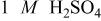 , borate buffer (pH 8.4), and 1 M NaOH. The onset potentials of the transpassive dissolution and the plateau potentials during galvanostatic oxidation and their pH dependence are very similar for passive Cr and sputter‐deposited
 films and indicate that the mechanism of transpassive dissolution of Cr can be experimentally modeled with
 . X‐ray near‐edge spectroscopy spectra acquired during anodic potential steps reveal that, prior to transpassive dissolution, Cr(VI) is trapped in the
 film. There is no evidence of formation of intermediate Cr(IV); it appears that
 is directly oxidized to
 (or
 in acidic solutions). X‐ray near‐edge spectroscopy measurements made during galvanostatic oxidation/dissolution show that the reaction
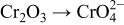 (or
 ) takes place with a 100% current efficiency over the whole pH range (1 to 13). The results suggest that the transpassive dissolution of metallic chromium is a two‐stage process
 , with a faster kinetics of the first step; hence, the thermodynamics and kinetics of the transpassive dissolution of Cr are completely determined by the surface oxide. The significance of present findings for other experimental techniques and possible consequences for the corrosion resistance of stainless steels are discussed.
Access this article
The computer you are using is not registered by an institution with a subscription to this article. Please choose one of the options below.
Purchase from
Purchase this article from our trusted document delivery partners.

Make a recommendation
To gain access to this content, please complete the Recommendation Form and we will follow up with your librarian or Institution on your behalf.
For corporate researchers we can also follow up directly with your R&D manager, or the information management contact at your company. Institutional subscribers have access to the current volume, plus a 10-year back file (where available).
