
Abstract
The three metal-centered reactions of  (1), where
 is 2-(2-methylanilino)pyridinate anion, were electrochemically investigated in three different cationic matrices at a basal plane pyrolytic graphite (BPG) electrode immersed in 0.5 M aqueous KCl solution. The matrices were tetra-n-octylphosphonium bromide
 tetra-n-octylammonium bromide
 or tetra-n-heptylammonium bromide
 Complex 1 was also examined in a cast film of an artificial lipid, di-n-hexadecyldimethylammonium poly(styrene sulfonate),
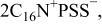 which has a phase-transition between the crystalline and the liquid crystalline phase at 26.6°C. Here, the
 reaction shows a strong phase-transition temperature dependence, suggesting the possibility of a temperature-driven, “on-off” switching for the electrochemistry of 1. © 2003 The Electrochemical Society. All rights reserved.
Access this article
The computer you are using is not registered by an institution with a subscription to this article. Please choose one of the options below.
Purchase from
Purchase this article from our trusted document delivery partners.

Make a recommendation
To gain access to this content, please complete the Recommendation Form and we will follow up with your librarian or Institution on your behalf.
For corporate researchers we can also follow up directly with your R&D manager, or the information management contact at your company. Institutional subscribers have access to the current volume, plus a 10-year back file (where available).