
Abstract
The plasma display panel (PDP) as a medium of large format TV is gaining attention due to its high performance and scalability. The performance and life, or stability, of a PDP is strongly related to the nature of phosphors. Life and persistence are the main concerns in Mn-activated zinc silicate and barium-aluminate-based green phosphors. The preparation and characterization of terbium-activated-yttrium borate 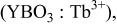 gadolinium borate
 lanthanum phosphate
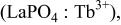 yttrium phosphate
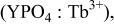 and their blends with Mn-activated zinc silicate and barium aluminate phosphors are presented. Despite high quantum efficiency, Mn-activated phosphors have a higher persistence (>10 ms). The persistence (10%) of
 -activated phosphors ranges from 8 to 10 ms, required for typical TV operation. AC PDPs (42 in.) were made with conventional zinc silicate- and Tb-activated borate phosphors. Their optical characteristics, as well as the life of the phosphors, were studied over 2 years of continuous operation. The data reveals that borate-based phosphor is stable and also improves the uniformity of discharge characteristics in ac PDPs. To overcome the blue peak and take advantage of higher lifetime and lower persistence of yttrium borate, blends of zinc silicate and yttrium borate or barium aluminate and yttrium borate phosphors are studied and their luminescent characteristics are presented. The advantage of using these blends in PDPs is discussed. © 2003 The Electrochemical Society. All rights reserved.
Access this article
The computer you are using is not registered by an institution with a subscription to this article. Please choose one of the options below.
Purchase from
Purchase this article from our trusted document delivery partners.

Make a recommendation
To gain access to this content, please complete the Recommendation Form and we will follow up with your librarian or Institution on your behalf.
For corporate researchers we can also follow up directly with your R&D manager, or the information management contact at your company. Institutional subscribers have access to the current volume, plus a 10-year back file (where available).
